By Dr. David LaMond, Medical Director, Dermablue
Skin laxity happens when collagen and elastin decline with age, sun exposure, weight change, and time. Patients often want firmer skin and better contour, yet they do not want surgery, needles, numbing, or downtime. XERF is a newer option built for this exact gap: a non-invasive, monopolar radiofrequency (RF) treatment designed to heat supportive tissue layers in a controlled way, then trigger gradual collagen remodeling.
What makes XERF “novel”
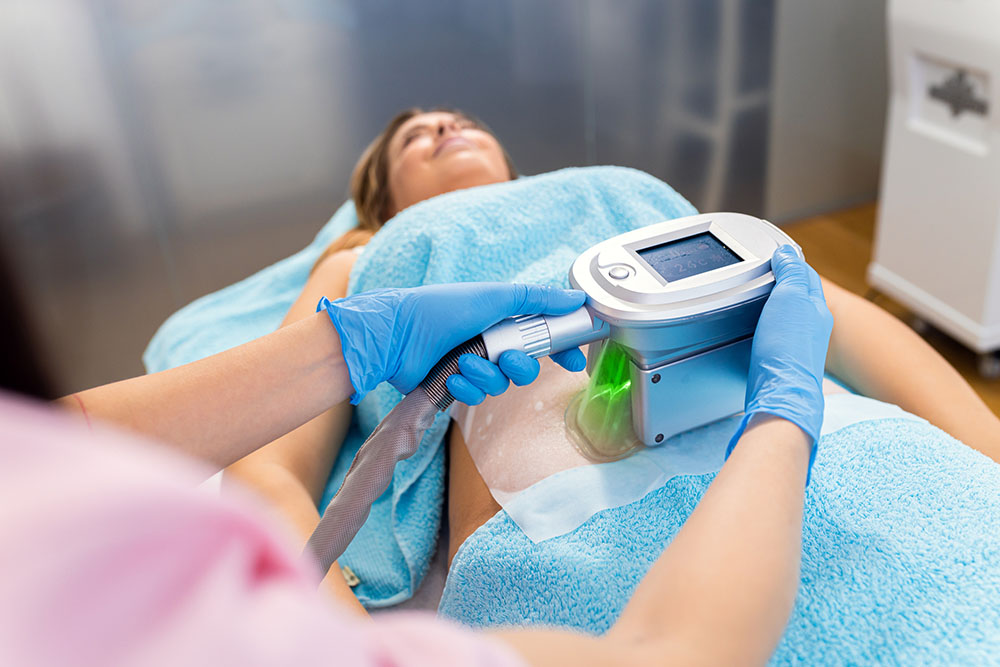
XERF uses dual-frequency monopolar RF (2 MHz and 6.78 MHz) plus real-time impedance feedback and integrated cooling. Practically, this lets a provider deliver energy across multiple tissue depths with tight temperature control and patient comfort. The FDA 510(k) summary describes the energy delivery and device characteristics, including the dual frequencies and non-invasive delivery.
Independent peer-reviewed work in Skin Research and Technology reports measurable tissue-level changes after dual-frequency monopolar RF, supporting the concept of deeper structural impact compared with older single-frequency approaches.
A newer Lasers in Medical Science paper modeling 2 MHz vs 6.78 MHz (and sequential use) further supports frequency-dependent differences in thermal distribution and histologic response, which aligns with the rationale behind multi-frequency design.
What XERF treats:
Most patients pursue XERF for mild to moderate laxity and early contour change, commonly in:
- Face and cheeks
- Jawline and early jowling
- Neck (mild banding or “softening,” not severe redundancy)
- Fine lines and crepey texture, when laxity drives the look
XERF is not a surgical facelift substitute. It is a collagen remodeling tool for patients who want visible tightening with minimal disruption.
Best candidates usually share a few traits:
- Mild to moderate laxity (skin still has “bounce,” yet looks looser than desired)
- Realistic goals: natural-looking improvement, not a dramatic lift
- Willingness to let collagen biology work over time (weeks to months)
- Desire for minimal downtime and no needles
Patients who may need a different plan:
- Significant laxity or heavy skin redundancy (often surgical territory)
- Major volume loss (may need filler, biostimulators, or fat support first)
- Uncontrolled inflammatory skin disease in the treatment area
- Implanted electronic devices or metal in a location relevant to treatment planning (we screen during consult)
What a treatment feels like
Most patients describe a deep warming sensation with surface cooling. XERF is designed to avoid numbing and minimize “post-treatment tells,” so patients usually return to normal activities same day.
What to expect after treatment
Right after:
Mild redness or warmth can occur and typically settles quickly. Many patients feel subtle “tightness” early, partly from immediate collagen fiber response to heat.
Over 4–12 weeks:
The more meaningful change develops as collagen remodels and matures. This delayed improvement aligns with established RF biology and the tissue response described in peer-reviewed reports on monopolar RF and dual-frequency approaches.
How many treatments are typical
Most treatment plans land in one of two lanes:
- Single-session tightening for mild laxity and maintenance-minded patients
- A short series (commonly 2–3 sessions) for more visible change in laxity and contour
At DermaBlue, we tailor the count to skin thickness, laxity severity, and response after the first session. Come see us for a look at our results!
How long results last
Collagen remodeling is not permanent, since aging continues. Many patients maintain visible benefit for roughly 12 months or longer, especially with good skin care, sun protection, stable weight, and an annual maintenance plan. Your biology, baseline laxity, and lifestyle drive durability more than any single device feature. (In consult, we anchor expectations to your starting point and your goals.)
Investment & XERF Pricing
XERF pricing depends on treatment area, time, and whether we plan a single session or a series (face only vs face + neck, for example). Dermablue provides exact pricing during a consultation after we map a plan matched to your anatomy and goals.
Safety profile
Non-ablative monopolar RF has an established safety history when performed by trained clinicians using appropriate settings and cooling. The FDA clearance documentation for XERF describes device parameters and non-invasive delivery consistent with this category of treatment.
Dr Dave’s Take Home Thoughts:
XERF RF Therapy introduces advanced, dual-frequency radiofrequency technology that delivers energy across multiple tissue depths to stimulate collagen and elastin production without needles, numbing, or downtime. The platform’s customization and comfort features support a positive patient experience. Outcomes build progressively, with a series of treatments and maintenance recommended for sustained improvement.
For patients seeking firm, lifted, more youthful-appearing skin without surgery, XERF offers a promising, scientifically grounded option when delivered by experienced providers. We are proud to offer this at DermaBlue.
— Dr. David LaMond
Medical Director, Dermablue
Frequently Asked Questions About Bioactive Fillers
Does XERF work for skin tightening?
XERF is designed to deliver controlled monopolar RF energy at dual frequencies with real-time feedback and cooling. Peer-reviewed reports on dual-frequency monopolar RF show tissue-level collagen and fascial layer changes consistent with tightening mechanisms. Yes, patients will experience skin tightening and we expect this to be our go to for this condition on the face and body.
Is there downtime?
Most patients return to normal activity immediately, with possible mild transient redness or warmth.
When will I see results?
Some patients notice early firmness quickly. The bigger change typically develops over 4–12 weeks as collagen remodels. In fact, from my 20 year’s experience with medical cosmetic lasers, this is the first treatment we see patients get up from the treatment looking noticeably better.
How many sessions do I need?
Many patients do 1 session for mild laxity or maintenance. Moderate laxity often responds better to a short series (commonly 3). We individualize your treatment plan after exam.
Can XERF replace a facelift?
No. It can meaningfully tighten mild to moderate laxity. Surgery remains the strongest option for advanced laxity.