By Dr. David LaMond, Medical Director, DermaBlue
At DermaBlue, we spend a lot of time talking about lasers, fillers, skincare routines, collagen stimulation, and all the tools we use to keep your skin healthy and vibrant. But if we’re going to be truly honest and forward-thinking about aging, we also need to talk about something deeper: your hormones.
Your skin isn’t just a cosmetic surface. It’s a living, hormonally responsive organ — and when hormone levels decline, the skin shows it quickly.
This is why our sister practice, Blue Sky MD, provides expert hormone consultation and management for women who may benefit from hormone replacement therapy (HRT). When we combine hormone optimization with advanced dermatology treatment, the results can be transformative.
Let’s break down what the science tells us about how hormones — especially estrogen and progesterone — affect skin health and aging.

Why Hormones Shape How Your Skin Ages
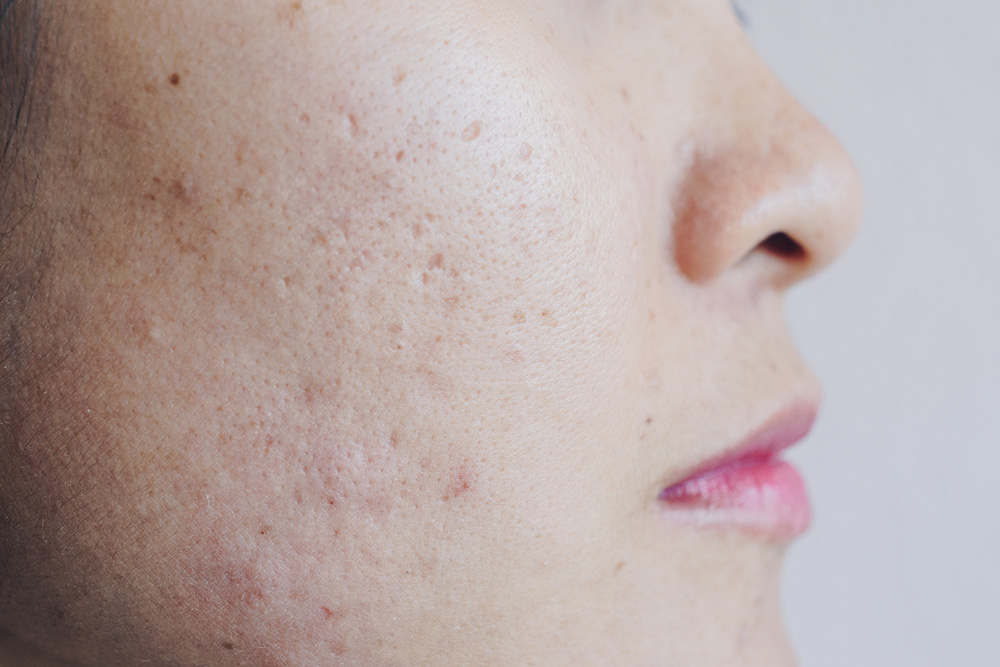
As women move through perimenopause and menopause, levels of estrogen and progesterone naturally decline. This isn’t simply a “reproductive hormone” issue — these hormones regulate many of the structures that determine how youthful your skin looks and feels.
Research consistently shows that after menopause:
- Skin thickness decreases by 1–2% per year
- Collagen drops by up to 30% in the first five years
- Elasticity diminishes
- Hydration decreases
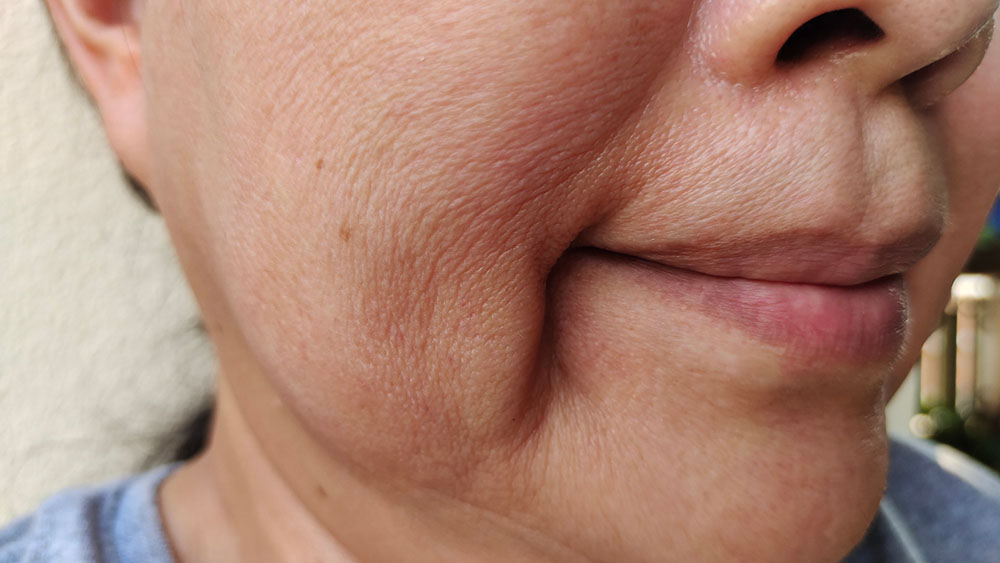
- Fine lines and wrinkles accelerate, particularly around the mouth (perioral area), eyes, and cheeks
This means the shift you may be noticing in your skin — deeper wrinkles, dryness, or a loss of firmness — is often a hormonal change.
Estrogen: The Collagen-Support Hormone
Estrogen receptors exist throughout your skin. When estrogen levels fall, your collagen and elastin production fall with them.
Medical studies have shown that estrogen replacement therapy can:
- Increase dermal collagen
- Increase skin thickness
- Improve elasticity
- Enhance hydration
- Reduce the severity of wrinkles
A 2022 meta-analysis confirmed that menopausal hormone therapy significantly improves elasticity, wrinkle depth, and collagen density, validating what we see clinically every day.
This is one reason many of our DermaBlue patients who start medically appropriate hormone therapy at Blue Sky MD often report softer, firmer, more luminous skin.

The Progesterone Connection: What Many Women Overlook
Estrogen often gets all the attention in skin aging — but progesterone plays an important role as well.
Progesterone & Skin Health
Progesterone receptors are present throughout the skin, and emerging research shows progesterone helps maintain:
- Skin firmness
- Skin elasticity
- Healthy sebum balance
- A resilient dermal structure
One randomized controlled study using topical 2% progesterone cream showed improved elasticity and reduced wrinkle depth across multiple facial areas. While this isn’t the same as systemic hormone therapy, it reinforces a key point:
Progesterone decline affects the skin, too.
Perioral Wrinkles & Low Progesterone
One of the hallmark clinical signs many women notice during progesterone decline is an increase in:
- Vertical lip lines
- Perioral (smoker’s-type) wrinkles
- Thinning of the upper lip
- Loss of support around the mouth
This pattern is often mistakenly attributed solely to sun damage — but hormone decline is a major driver.
At DermaBlue, we treat these wrinkles externally with tools like microneedling, lasers, PRF, fillers, and resurfacing — but pairing these treatments with proper hormone support through Blue Sky MD often enhances and prolongs results.

Why We Partner with Blue Sky MD for Hormone Management
DermaBlue focuses on your skin from the outside in. Blue Sky MD focuses on your health from the inside out.
Together, we provide a more complete, whole-patient approach.
Blue Sky MD offers:
- Comprehensive hormone labs
- Bioidentical hormone replacement (estrogen, progesterone, testosterone when appropriate)
- Pellet therapy, oral, and transdermal options
- Symptom-driven, individualized treatment
- Support for sleep, mood, energy, libido, and metabolic health — all of which influence skin aging
When hormone balance is restored, your skin becomes more responsive to the dermatologic treatments we perform at DermaBlue.
Simply put: Healthy hormones create a better canvas.

Who Might Benefit from Hormone Evaluation?
You may benefit from a consultation at Blue Sky MD if you’re noticing:
- New or worsening facial wrinkles (especially around the mouth)
- Changes in skin texture or hydration
- Loss of skin firmness
- Sudden facial aging during perimenopause
- Trouble with sleep, energy, or weight
- Hot flashes or temperature swings
- Mood changes
- Irregular or absent cycles
These are common signs of shifting estrogen and progesterone levels.
A hormone evaluation doesn’t commit you to treatment — it simply gives you knowledge. And for many women, it becomes a turning point in both how they look and how they feel.

A Modern Approach to Aging Gracefully
Aging isn’t something to “fix” — but understanding why it happens gives us better tools to support you.
Our approach is simple:
- Assess hormones (Blue Sky MD)
- Improve skin structure, collagen, and texture (DermaBlue)
- Combine the best of internal and external care
This synergy is where we see the most powerful transformations.
If you’d like to explore whether hormone evaluation or HRT might support your skin goals, we can help guide you. Ask any of our DermaBlue providers or contact Blue Sky MD directly for a comprehensive hormone consultation.
Your skin reflects your overall health, and you deserve both to look and feel your best.

References
- Brincat MP. Hormone replacement therapy and the skin. Climacteric. 2005;8(2):110–123.
- Trifunovic M, et al. Skin Changes During Menopause and Their Treatment. 2024. PMC10796198.
- Chae B, et al. Effects of Menopausal Hormone Therapy on Skin Aging. J Menopausal Med. 2022;28:133–142.
- Thornton MJ. Estrogens and aging skin: basic and clinical aspects. Dermatoendocrinol. 2013.
- Stevenson S, Thornton J. Effects of estrogens on skin aging and SERMs. Clin Interv Aging. 2007.
- Schmidt JB et al. Treatment of skin aging with topical progesterone. Int J Dermatol. 2005;44:1–7.
- NorthShore Menopause & Skin Changes. Northwestern Medicine.
- Menopause and the effects of HRT on skin aging. Gynecology and Reproductive Endocrinology & Metabolism.2024.