Hair thinning is one of the most common concerns I evaluate in clinic. Some patients notice widening parts or thinning at the temples. Others see increased shedding in the shower. In many cases, loss begins years before it becomes obvious.
To treat hair loss well, we first need to understand what is changing at the follicle level.
How Hair Loss Happens
Each hair follicle cycles through growth (anagen), transition (catagen), and rest (telogen). In healthy scalp tissue, most follicles remain in anagen for several years. In hormone-related hair loss, androgenetic alopecia and other thinning conditions, anagen shortens. Follicles gradually miniaturize. The hair shaft becomes finer with each cycle. Local blood flow decreases. Inflammatory signaling around the follicle increases. Over time, density declines.
If follicles are still present but weakened, we can often improve their performance. If follicles are completely lost or replaced with scar tissue, non-surgical options have limited impact. This is why early intervention produces better outcomes.
Laser hair restoration with KeraLase
Lutronic Ultra with KeraLase is designed to improve the scalp environment and enhance follicular function in patients who still have viable hair units.
Lutronic Ultra uses a 1927 nanometer thulium fractional laser. This wavelength creates thousands of microscopic, evenly spaced channels in the upper layers of the scalp. These channels are controlled and precise. They do not remove tissue in an ablative manner. Instead, they stimulate a mild repair response.
This controlled micro-injury increases local circulation and up-regulates growth factor activity. At the same time, the temporary channels improve transdermal delivery. The scalp barrier normally limits penetration of topical products. After fractional treatment, absorption of applied serums increases significantly because those molecules bypass the stratum corneum.
What is KeraLase?
Immediately following laser application, we apply KeraLase serum. This formulation contains a proprietary blend of growth factors and signaling peptides derived from conditioned media. These biologically active molecules are intended to support follicular signaling, improve microvascular supply, and reduce inflammatory stress in the perifollicular space.
Chronic low-grade inflammation around the follicle contributes to progressive miniaturization. When inflammatory signaling decreases and blood supply improves, follicles are more likely to remain in anagen longer and produce thicker hair shafts.
What results to expect from laser hair restoration
It is important to set expectations accurately. This treatment does not generate new follicles. It strengthens and supports existing follicles. The degree of improvement depends on how many viable units remain in the treatment area.
Who is a good candidate for laser hair restoration?
In my clinical experience, best candidates include men and women with early androgenetic alopecia, diffuse thinning, postpartum shedding, or stress-related telogen effluvium once active shedding stabilizes. It is also appropriate for patients who prefer a non-invasive approach or who want to enhance density while using medical therapies such as topical or oral DHT modulation.
Laser hair restoration treatment timeline
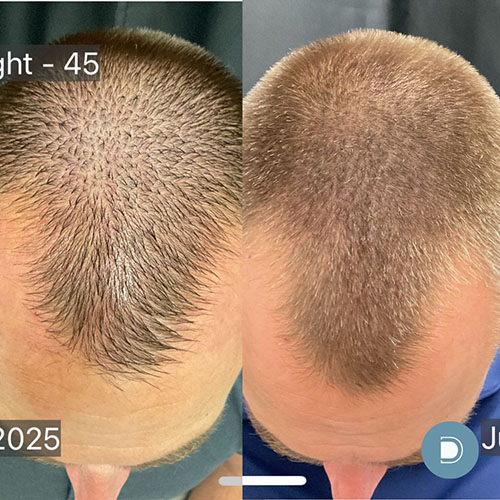
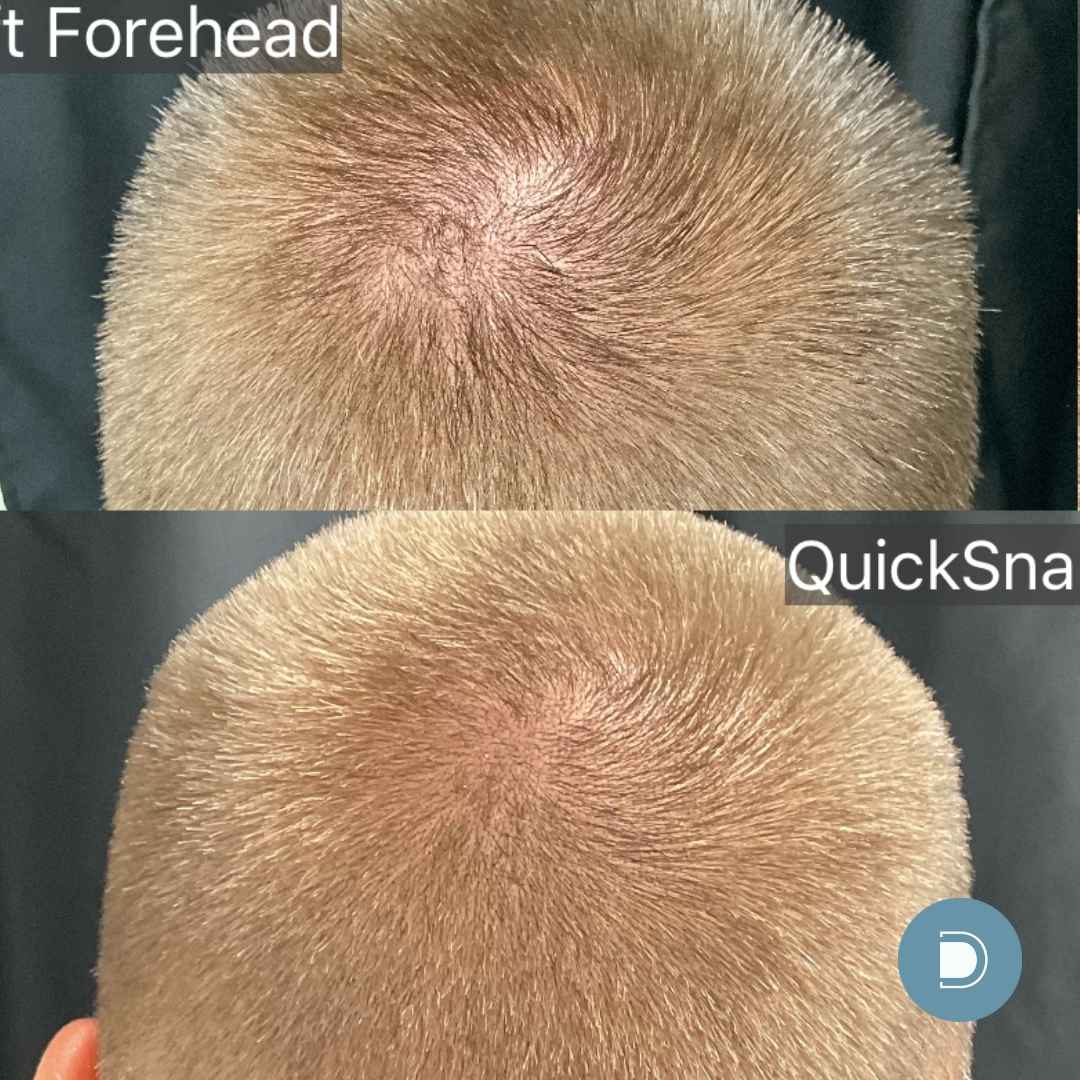
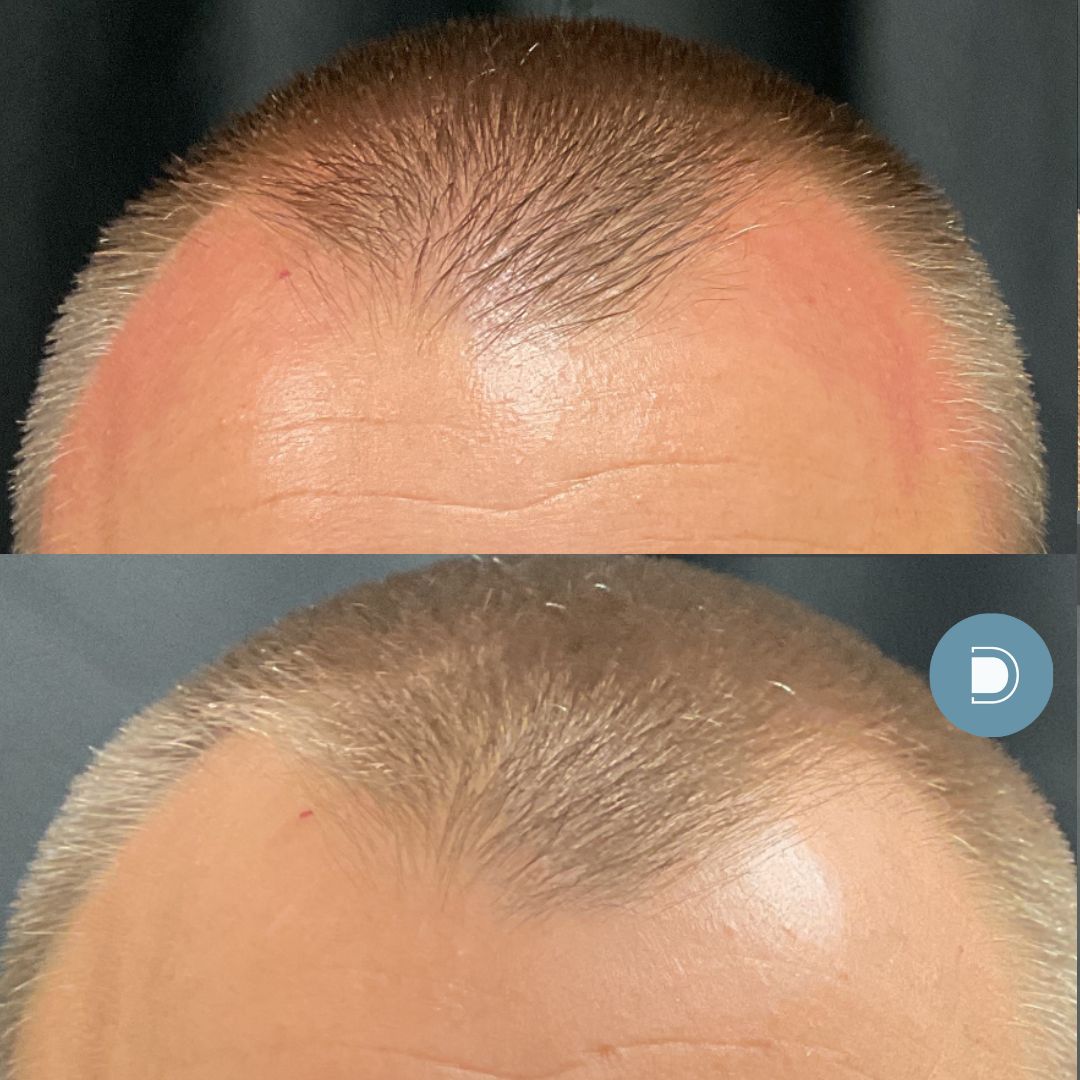
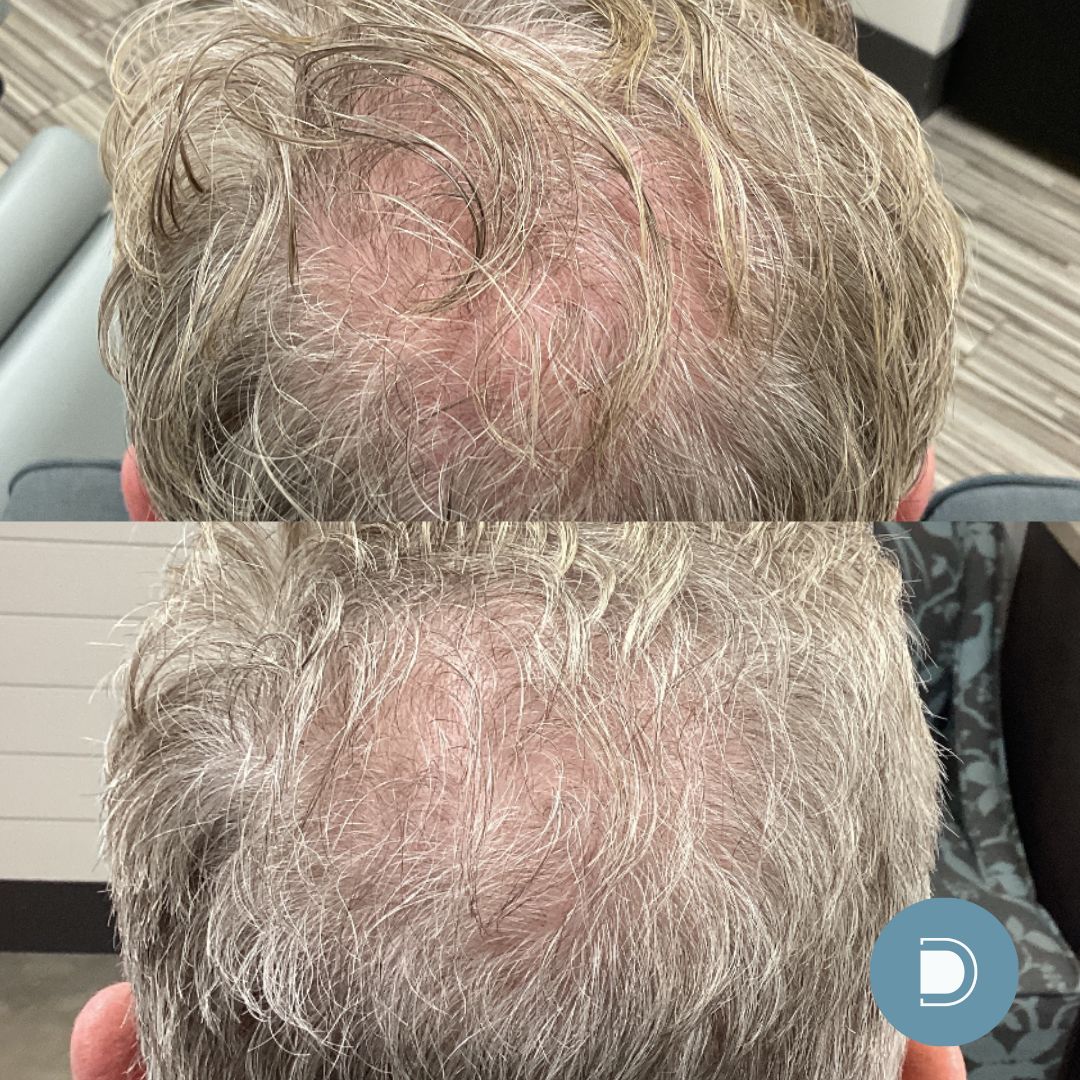
A standard protocol involves three treatments spaced about four weeks apart. Many patients notice reduced shedding within one to two months. Increased thickness typically becomes visible between eight and twelve weeks, with continued improvement over several months. Hair growth cycles require time, so results are gradual.
Downtime is minimal. Mild redness or warmth may occur for one to two days. There are no injections and no blood draw, which makes this appealing for patients seeking lower-intensity regenerative therapy.
Our approach to hair restoration at DermaBlue
At DermaBlue, we rarely use a single modality in isolation. Hair thinning often reflects multiple contributing factors, including androgen signaling, micronutrient deficiency, thyroid imbalance, protein insufficiency, or metabolic stress. We evaluate iron stores, vitamin D levels, thyroid markers, and hormone status when indicated. If DHT-driven miniaturization is present, we address it. If nutrient deficiencies exist, we correct them.
Lutronic Ultra with KeraLase functions as an adjunct within this broader framework. It enhances scalp perfusion and improves delivery of biologic signaling molecules. In appropriate patients, we may combine it with platelet-rich fibrin, targeted medical therapy, nutritional optimization, or advanced surgical referral when needed.
In short: early intervention with can make a huge difference for hair loss
Hair loss progresses over years. Intervening early preserves density and improves long-term stability. My objective is not a short-term cosmetic change. The goal is to slow miniaturization, extend the growth phase, and maintain follicular strength in a sustainable way.
When patients understand the mechanism and realistic outcomes, they make better decisions and remain consistent with treatment. Consistency, early evaluation, and a structured plan produce the best results.
If you have any questions about laser hair restoration with Lutronic Ultra or KeraLase, simply reach out to schedule a free 30-minute consultation with one of our laser experts. We look forward to seeing you at Dermablue!