If you’re dealing with acne scarring, you’ve probably searched “best chemical peel for acne scars” more than once, and you’ve probably gotten a dozen different answers. Here’s the truth, though: it depends on the type of scarring you have.
Not all acne scars are the same
Everyone’s skin is different, and so are the different ways that acne affects each of our skin and pores. Acne scars generally fall into a few categories, and each one responds differently to treatments.
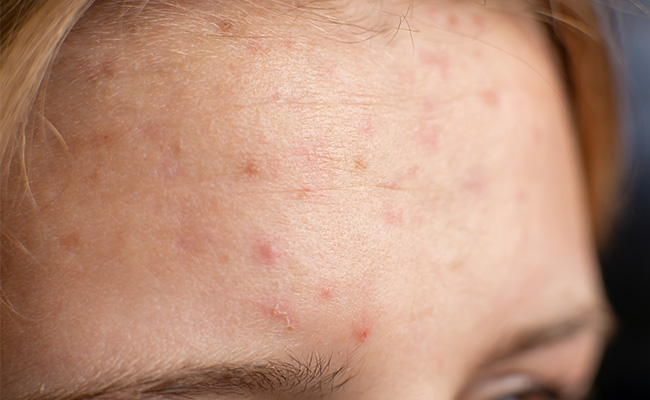
1. Discoloration and shallow texture
This includes the red or brown marks left behind after a breakout heals, along with mild roughness or uneven tone. This is where chemical peels shine.
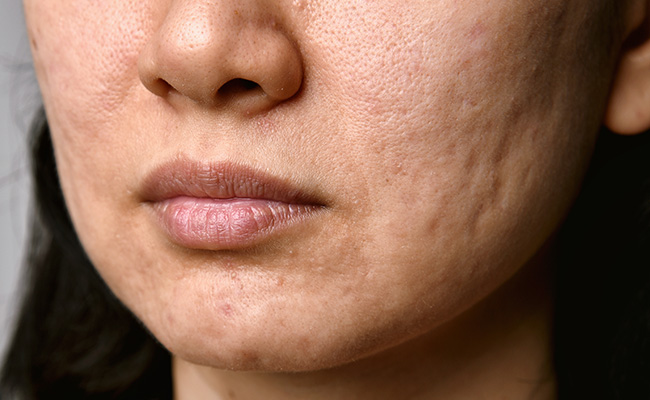
2. Rolling scars
These create a soft, wavy texture from bands of scar tissue pulling on the skin below the surface. Peels can help the surface look smoother, but they won’t fully resolve the underlying pull.
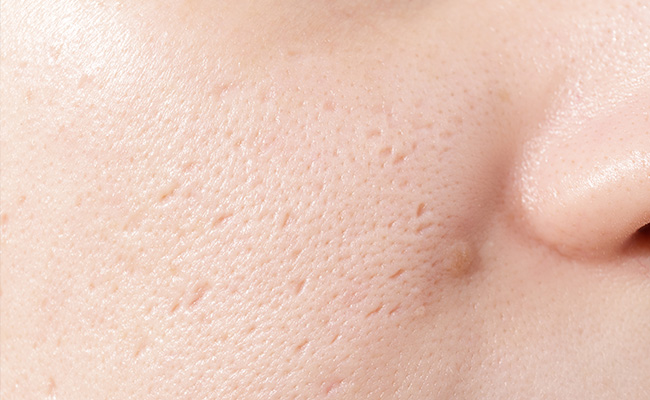
3. Boxcar and icepick scars
These are deeper, more defined indentations like the ones shown above. The scarring actually runs through to the deeper layers of skin, creating pockmarks. A peel alone typically isn’t enough here. Treatments like microneedling, laser resurfacing, or subcision usually need to be part of the plan.
Knowing which category you’re dealing with is the difference between a peel that delivers real results and one that leaves you disappointed.
What a chemical peel can do for acne scarring
For discoloration and surface texture, a chemical peel works by removing damaged outer layers of skin and encouraging fresh, evenly pigmented skin to take its place. Depending on your skin and your goals, we might use:
- A glycolic or lactic acid peel for mild texture and tone, with minimal downtime
- A salicylic acid peel, which is especially useful if you’re still prone to breakouts, since it also gets deep into pores
- A TCA (trichloroacetic acid) peel for more noticeable scarring and pigmentation, at a strength matched to your skin
A series of peels, spaced a few weeks apart, tends to outperform a single treatment for scarring specifically.
The PCA SKIN® peels we use in office
At DermaBlue, our chemical peels come from PCA SKIN, a professional-grade line that lets us match the strength and formula to your skin rather than using a one-size-fits-all treatment.
For acne-related concerns specifically, our PCA SKIN Retinol Peel is a good example of how that works. It comes in two strengths, 4% and 6%, both built around clinical-strength retinol to speed up cell turnover, along with marigold extract to calm the skin and an antioxidant blend that helps everything absorb well.
Along with reducing fine lines and improving uneven tone, it’s formulated to improve acne-related skin concerns specifically. Visible peeling usually starts two to three days after treatment and continues for up to about ten days, so we’ll help you plan around that timeline and choose the strength that fits your skin and your schedule.
What to expect during a chemical peel treatment
Redness and light flaking are normal for a few days afterward, more with a stronger peel. Sun protection matters more than usual during this window, since new skin is more vulnerable to pigmentation changes. We’ll walk you through exact aftercare based on the peel you get.
Find out what a chemical peel can do for acne scarring.
If your scarring is mostly discoloration and mild texture, a peel (or maybe a series) may genuinely be your best first step, and often your only step. If you’re dealing with deeper rolling, boxcar, or icepick scars, a peel can still be part of the plan, just not the whole plan.
The best way to know which category you’re in is a free 30-minute skin consultation, (not just a guess based on a search result!). We can look at your scarring in person and build a treatment plan, whether that’s a peel on its own or a peel combined with something else, so you’re not paying for a treatment that was never going to get you there.
Ready to find out what will actually work for your skin? Book a free consultation or contact us at our Asheville or Hendersonville location.